Sensual Relaxation Rituals: Essential Oils and Massage for Nervous System Regulation
How Aromatherapy, Massage Oil Blends, and Bath Rituals Calm Stress, Support the Parasympathetic Response, and Restore Emotional Presence
The word sensual often gets funneled into romance, especially around Valentine’s Day. Yet true sensual relaxation has far less to do with candlelight and far more to do with nervous system regulation.
At its heart, sensuality is the practice of becoming fully awake to your senses and fully present in your body instead of rushing through life from the neck up. It is warmth on the skin. Breath that deepens naturally. Light that feels softer. The simple pleasure of noticing the room you are standing in.
When the body carries chronic stress, muscles tighten, breath becomes shallow, and circulation shifts into survival mode. In that state, perception narrows. Even beautiful surroundings can go unnoticed because the nervous system is focused on what must happen next.
Relaxation is a biological process.
The body must feel safe before it can slow down enough to enjoy anything.
Aromatic Pathways to Regulation
One of the reasons essential oils pair so beautifully with massage is that scent has a direct and immediate relationship with the limbic system, the part of the brain that processes emotion, memory, and mood. Unlike many sensory inputs that require conscious interpretation, aromatic molecules travel through the olfactory bulb and communicate quickly with areas of the brain responsible for emotional tone and stress regulation.
This is why a single inhale can shift perspective.
When stress lingers in the body, it subtly shifts the way we interpret everything around us. Thoughts take on a sharper edge, self-judgment rises to the surface, and patience becomes harder to access. In that state, the mind naturally gravitates toward what feels lacking or flawed, while the steady, supportive elements of our lives fade quietly into the background.
Essential oils with calming, anti-inflammatory, and anxiolytic chemistry help interrupt that pattern by signaling safety to the nervous system. As breath deepens and muscle tension softens, mental rigidity often eases alongside it.
Relaxation has a physical expression and a perceptual one. As the body settles, the way we interpret our surroundings shifts as well. Colors seem warmer. Conversation feels less charged. Internal dialogue becomes kinder. The same environment can feel entirely different when the nervous system is regulated.
From this more grounded state, connection flows more easily. Enjoyment returns without effort. Even ordinary moments feel richer because we are actually present for them.
With that understanding, the recipes we are about to explore are designed to gently guide the body and mind into that open, regulated space where relaxation feels natural and perspective feels lighter.
Essential Oils for Relaxation, Emotional Softening, and Stress Relief
Not all essential oils relax the body in the same way. Some brighten emotional tone. Some quiet muscular tension. Others deepen breath and anchor scattered thoughts. Formulating with intention creates more consistent nervous system support.
Monoterpenol- and Ester-Rich Oils
Calming, Antispasmodic, and Nervous System Supportive
These oils are particularly helpful when stress presents as muscular tightness, irritability, or anxious rumination. Their chemistry supports relaxation of both smooth and skeletal muscle while encouraging emotional ease.
Lavender (Lavandula angustifolia) – Rich in linalool and linalyl acetate; supports calming, antispasmodic effects and overall nervous system balance.
Sweet Marjoram (Origanum majorana) – Warming and muscle-soothing; particularly helpful when tension accumulates in the neck and shoulders.
Clary Sage (Salvia sclarea) – Ester-rich and emotionally centering; supports hormonal balance and emotional steadiness.
Roman Chamomile (Chamaemelum nobile) – High in calming esters; especially supportive for irritability and nervous tension.
These oils are ideal in massage blends and bath rituals where muscular relaxation is a primary goal.
Sesquiterpenol- and Sesquiterpene-Rich Oils
Grounding, Stabilizing, and Supportive of Sustained Regulation
These oils work more slowly and deeply. Their larger molecular structures are associated with grounding effects that help maintain parasympathetic dominance rather than briefly dipping into relaxation.
Sandalwood (Santalum album) – Supports deep, steady breathing and meditative awareness.
Patchouli (Pogostemon cablin) – Rich in patchoulol; stabilizes scattered energy and promotes emotional grounding.
Vetiver (Chrysopogon zizanioides) – Profoundly anchoring; often used when stress feels unrelenting or sleep is disrupted.
Frankincense (Boswellia carterii or sacra) – Encourages respiratory depth and focused calm.
These oils are especially useful in inhalers and evening blends when long-lasting steadiness is desired.
Monoterpene-Rich Citrus Oils
Mood Brightening, Circulatory Supportive, and Gently Uplifting
When stress narrows perception or creates emotional heaviness, citrus oils restore brightness without overstimulation.
Red or Green Mandarin (Citrus reticulata) – Gentle, sweet, and emotionally softening; generally regarded as non-phototoxic when properly diluted.
Bergamot (Citrus bergamia) – Contains both limonene and linalyl acetate; uniquely balancing and mood-supportive.
Sweet Orange (Citrus sinensis) – Widely accessible and uplifting; encourages ease and lightness.
Grapefruit (Citrus paradisi) – Fresh and clarifying; supports emotional reset and circulatory stimulation.
Citrus oils are excellent in daytime massage blends and bath soaks where gentle perspective-shifting is desired.
If you are formulating topical blends with cold-pressed citrus oils, review proper phototoxic safety guidelines before sun exposure. You can learn more about phototoxic essential oils and safe blending practices here.
Phototoxic essential oils and safe blending practices
Floral Oils
Emotional Openness, Heart-Centered Awareness, and Perceptual Softening
Floral oils often influence emotional receptivity and self-compassion. They are especially helpful when stress expresses as internal criticism or guardedness.
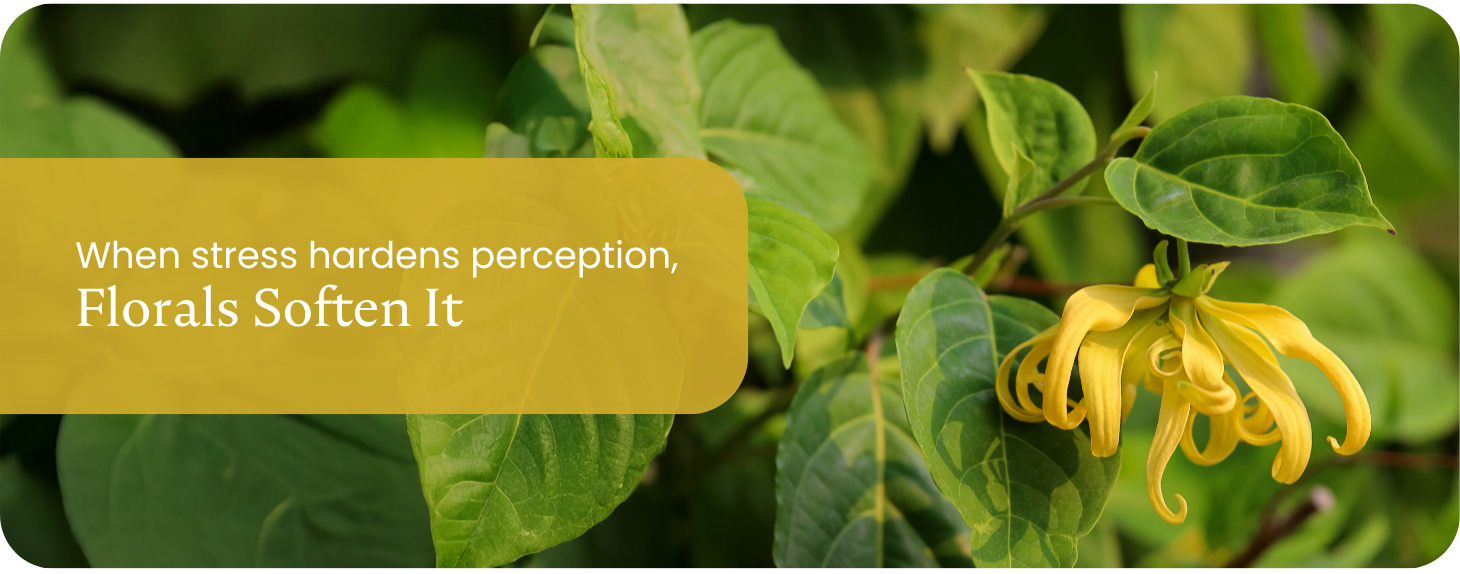
Ylang Ylang (Cananga odorata) – Supports cardiovascular calming and emotional softness.
Rose (Rosa x damascena) – Deeply heart-centered; associated with compassion and emotional resilience.
Neroli (Citrus aurantium var. amara flower) – Balancing and gently euphoric; particularly supportive during grief or emotional fatigue.
Jasmine (Jasminum grandiflorum or sambac) – Encourages emotional openness and confidence.
These oils shine in intimate massage rituals or inhalers designed for emotional reset.
Three Relaxation Rituals for Slowing Down
Each of these formulations supports nervous system regulation in a distinct way. One works through touch and transdermal absorption, one through immersion and thermal support, and one through direct olfactory influence. All three are designed to soften muscular tension, ease emotional rigidity, and create the internal conditions necessary to fully experience your surroundings.
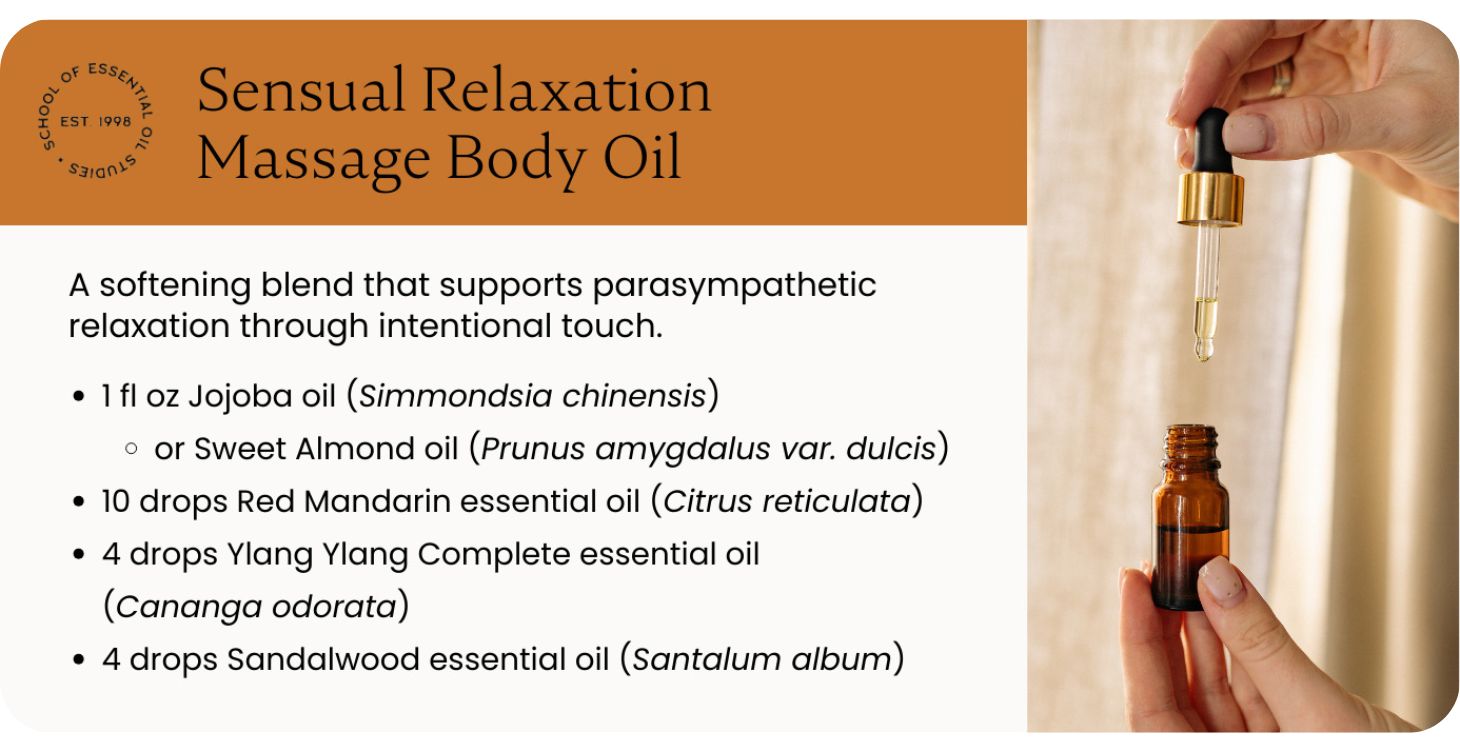
1. Sensual Relaxation Massage Body Oil
A softening blend that supports parasympathetic relaxation through intentional touch.
Level: Beginner
Yield: 1 fl oz (30 ml)
Ingredients
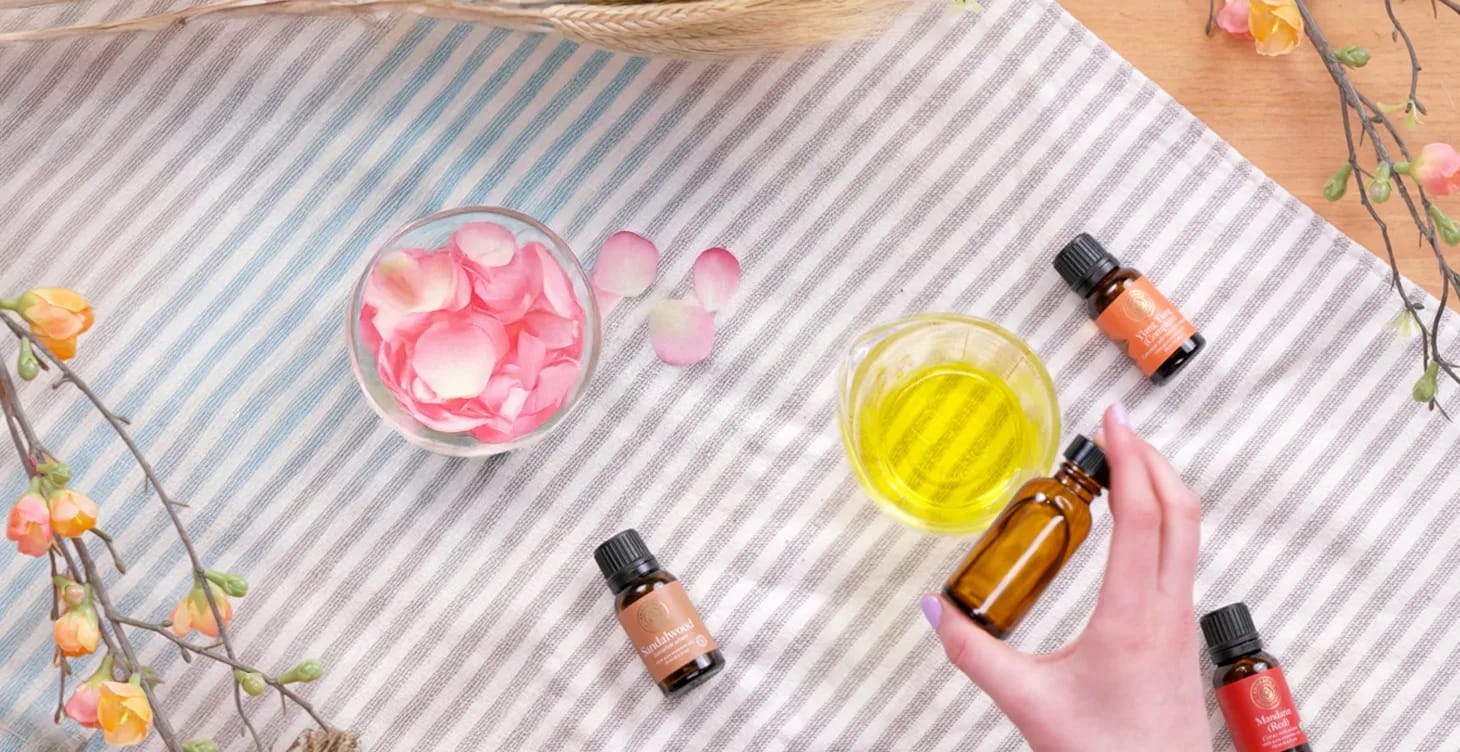
1 fl oz Jojoba oil (Simmondsia chinensis) or Sweet Almond oil (Prunus amygdalus var. dulcis)
10 drops Red Mandarin essential oil (Citrus reticulata)
4 drops Ylang Ylang Complete essential oil (Cananga odorata)
4 drops Sandalwood essential oil (Santalum album)
Directions
1. Add essential oils
Place the essential oils into a clean 1 fl oz glass bottle so their aromatic profiles can integrate before dilution.
2. Add carrier oil
Fill the bottle with 1 fl oz carrier oil to create a gentle 3% dilution appropriate for consistent relaxation use.
3. Blend gently
Cap securely and roll between your palms to combine thoroughly.
4. Apply slowly
Warm a small amount between your hands and massage into the skin using slow, steady strokes to encourage circulation and parasympathetic activation.
The Physiology Behind the Ritual
Intentional touch stimulates pressure receptors in the skin that communicate directly with the brain, supporting vagal tone and gently reducing sympathetic activation. Red Mandarincontributes limonene-associated brightness that subtly widens emotional perspective without overstimulation, while Ylang Ylang offers ester-rich calming that encourages cardiovascular settling and muscular ease. Sandalwood, high in sesquiterpenols, supports slower breathing patterns and sustained parasympathetic engagement, helping the body remain regulated rather than briefly relaxed. When paired with slow, deliberate massage, these aromatic constituents enhance circulation, deepen respiration, and create the internal steadiness that allows sensory awareness to expand comfortably.
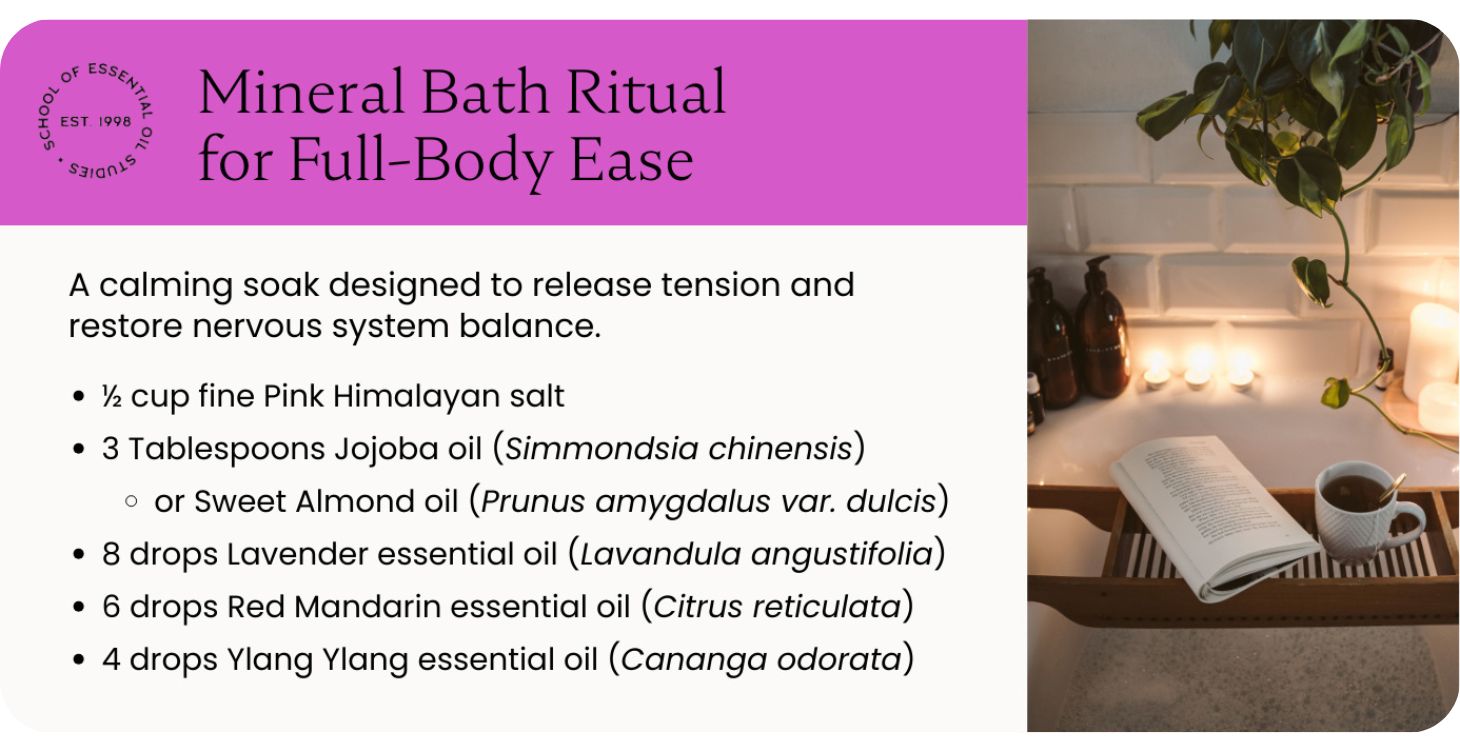
2. Mineral Bath Ritual for Full-Body Ease
A calming soak designed to release tension and restore nervous system balance.
Level: Beginner
Yield: 1 bath
Ingredients
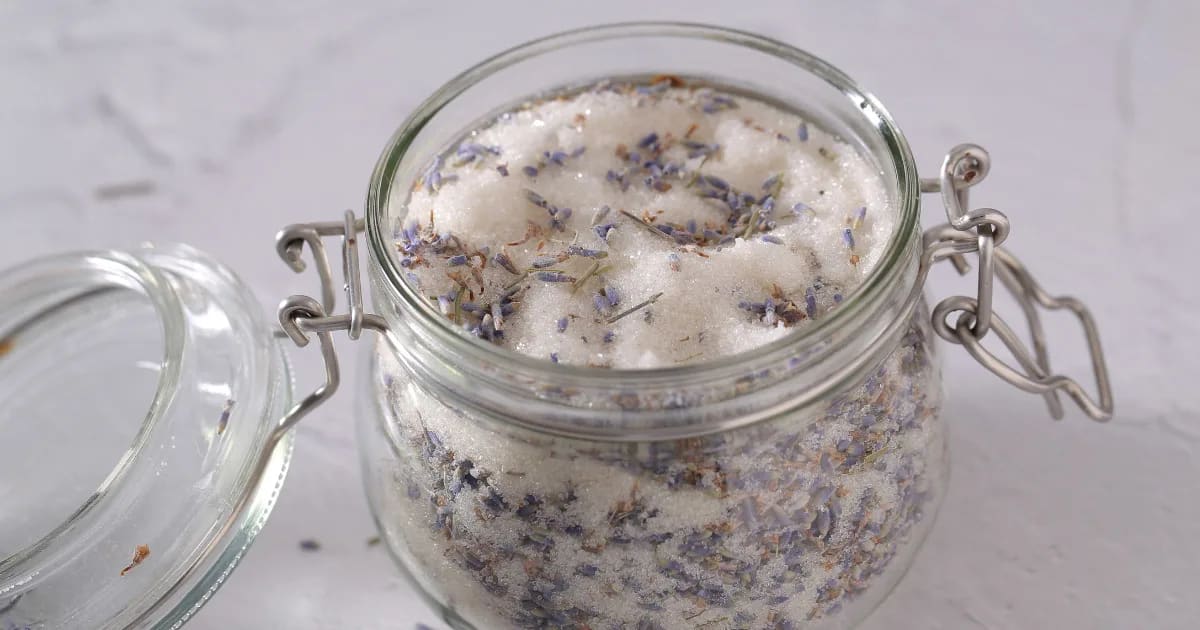
½ cup fine Pink Himalayan salt
3 Tablespoons Jojoba oil (Simmondsia chinensis) or Sweet Almond oil (Prunus amygdalus var. dulcis)
8 drops Lavender essential oil (Lavandula angustifolia)
6 drops Red Mandarin essential oil (Citrus reticulata)
4 drops Ylang Ylang essential oil (Cananga odorata)
Directions
1. Dilute essential oils
Blend the essential oils thoroughly into the carrier oil to ensure safe dispersion before entering bathwater.
2. Combine with salt
Pour the aromatic oil mixture over the salt and stir until evenly incorporated.
3. Add to bathwater
Place into warm running water and swirl gently to disperse.
4. Soak and unwind
Immerse for at least 20 minutes, allowing warmth and aroma to support muscular release and emotional easing.
Safety Note:
Oil-based blends may make the tub slippery. Wipe the surface thoroughly after draining and exit carefully.
Note for children:
For young children, omit essential oils entirely. Use ¼ cup fine Pink Himalayan salt mixed with 1 Tablespoon Jojoba oil. Supervise closely, as the tub surface may become slippery.
The Physiology Behind the Ritual
Warm water immersion promotes vasodilation and increased peripheral circulation, encouraging muscular release and easing subtle holding patterns throughout the body. Lavender (Lavandula angustifolia), rich in linalool and linalyl acetate, supports muscular relaxation and balanced mood, while Red Mandarin introduces limonene-driven brightness that gently lightens emotional heaviness. Ylang Ylang contributes cardiovascular calming and perceptual softening, and the mineral content of salt enhances full-body sensory input at the skin’s surface. Together, heat, buoyancy, and aromatic inhalation create layered cues of safety that support parasympathetic dominance, allowing breath to deepen and internal tension to subside naturally.
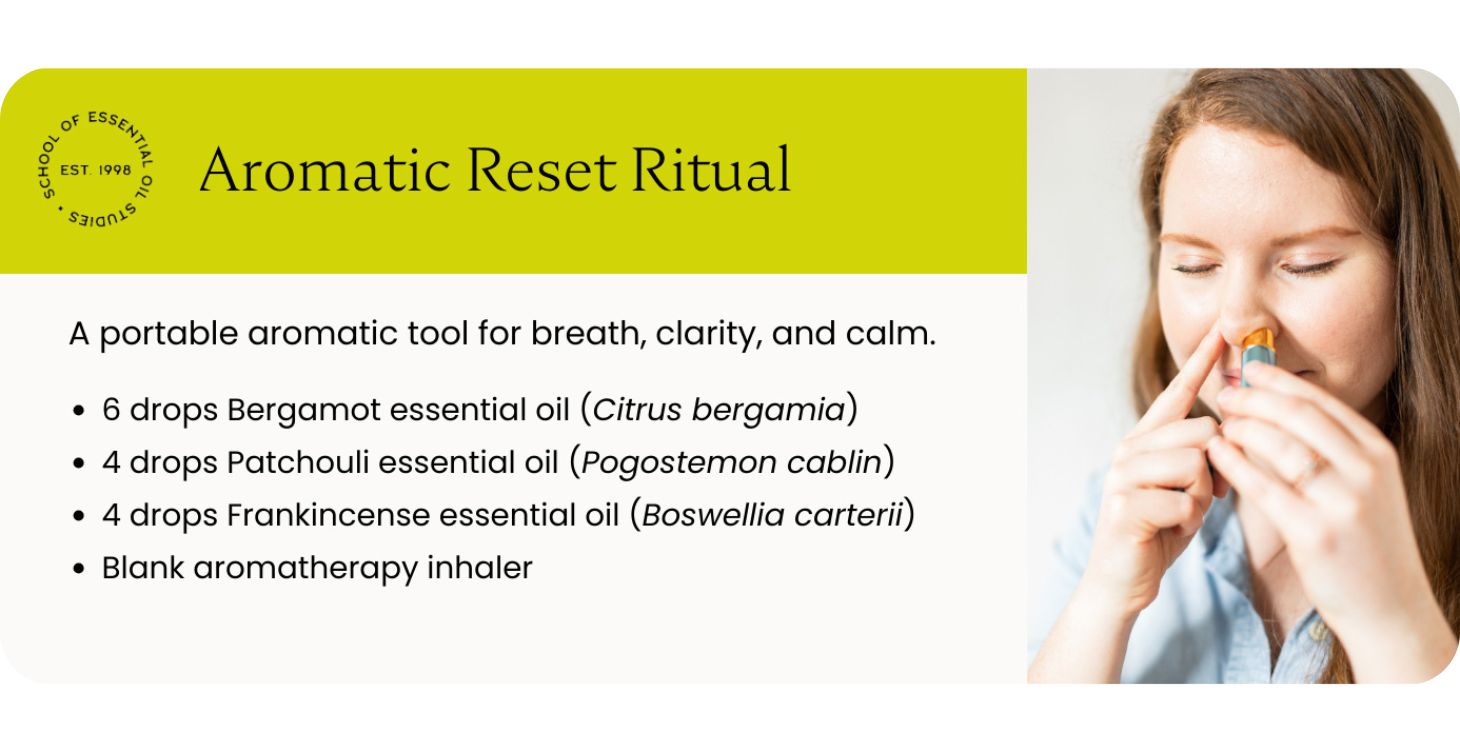
3. Aromatic Reset Ritual
A portable aromatic tool for breath, clarity, and calm.
Level: Beginner
Yield: 1 inhaler
Ingredients
6 drops Bergamot essential oil (Citrus bergamia)
4 drops Patchouli essential oil (Pogostemon cablin)
4 drops Frankincense essential oil (Boswellia carterii)
Blank aromatherapy inhaler
Directions
1. Prepare inhaler wick
Remove the cotton wick from the inhaler casing and place it on a clean surface.
2. Apply essential oils
Distribute essential oils evenly across the wick for balanced diffusion.
3. Insert and secure
Return the wick to the inhaler tube and cap tightly.
4. Inhale slowly
Hold beneath the nose and inhale deeply, allowing the exhale to lengthen naturally.
Dilution guidance:
For children, use 8–10 total drops of essential oil.
For adults, use 15–18 total drops of essential oil.
The Physiology Behind the Ritual
Volatile aromatic compounds reach the olfactory system rapidly, communicating with limbic structures involved in emotional processing and autonomic tone. Bergamot offers a balanced combination of limonene and linalyl acetate that supports emotional steadiness with gentle uplift, while Patchouli provides grounding sesquiterpenes associated with perceptual stabilization. Frankincense (Boswellia carterii or sacra) encourages slower respiratory rhythm and focused awareness, reinforcing regulatory breathing patterns. Because inhalation bypasses many cognitive filters, this ritual can shift internal tone quickly, restoring mental clarity and widening perspective without force.
My Takeaway
What I’ve realized over the years is that slowing down does not just happen because the calendar says it should. Even on Valentine’s Day, even on a quiet Sunday, the body does not automatically relax just because we want it to. We have to give it cues.
For me, that looks like warming oil in my hands before I touch someone’s shoulders, or running a bath and actually staying in it long enough to feel my breath change. It looks like keeping an inhaler nearby for the moments when I can feel my thoughts getting a little sharp or impatient. These small rituals are simple, but they tell the nervous system it is safe to soften.
I have noticed that when my body settles, everything else shifts with it. I become kinder in my thoughts. I notice the light in the room. I enjoy the conversation instead of planning the next thing I need to do. It is not dramatic. It is steady.
That is what sensuality means to me now. It is not about intensity. It is about presence. It is about feeling my feet on the floor, my breath moving easily, and the people around me without tension sitting between us.
And honestly, that feels like the most beautiful gift we can give ourselves and each other, any day of the year.