Home · Essential oil guides · Essential oils for skin

An Aromahead field guide

Essential oils for skin

Start with the carrier oil, not the essential oil. Most essential oils don't hydrate skin. Water does that. What oils do is help skin hold its moisture: calming inflammation, protecting the barrier, supporting healthy cell turnover. Rose otto, sandalwood, carrot seed, Roman chamomile, and geranium are our five for the face, at one or two drops per fluid ounce of carrier.

  • Rose otto (Rosa × damascena) · the gold standard for dry, mature, redness-prone skin
  • Sandalwood (Santalum album) · cooling, and balancing for oil production
  • Carrot seed (Daucus carota) · a cellular regenerator for aging skin
  • Roman chamomile (Chamaemelum nobile) · for sensitive, reactive, easily flushed skin
  • Geranium (Pelargonium graveolens) · regulates sebum, suits oily and dry alike
  • Helichrysum (Helichrysum italicum) · the redness and scar-support oil

What oils actually do for skin

Commercial skincare leans on flashy claims. The honest version is narrower and more useful: hydration comes from water, and oils are what keep it from leaving.

They help skin hold water, not add it

Most essential oils don't actually hydrate the skin. They help your skin absorb and keep hydration by calming inflammation, protecting your barrier, and encouraging healthy cell turnover and circulation. That is why a facial oil goes on after your moisturizer, to seal in what is already there.

The Aromahead approach to skincare

The barrier is the thing you are protecting

The stratum corneum is your skin's first line of defense, locking in hydration and shielding against environmental stress. Rose otto has been shown to reduce transepidermal water loss, the measure of moisture escaping through that barrier.1

Fukada et al., 2012

Stress shows up on your face

The same rose otto study found it prevented high cortisol, which matters for skin: cortisol can reduce ceramide production, break down collagen, slow the skin's repair process, and increase inflammation.1

Fukada et al., 2012

The carriers, then the oils

Carrier oils are most of what you put on your skin, so they deserve the first decision. The essential oils are the accent, a drop or two, chosen for what your skin is doing.

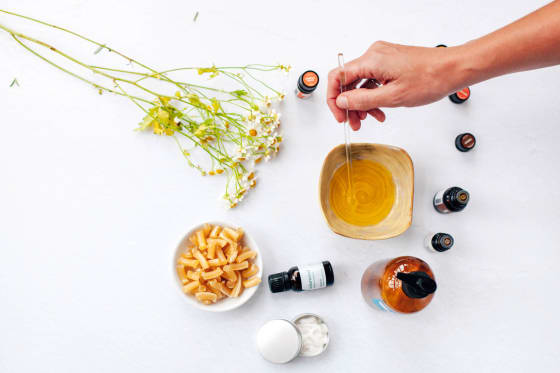
Overhead view of a hand stirring golden carrier oil in a wooden bowl, surrounded by chamomile flowers, wax pastilles, and amber essential oil bottles

Rose otto

Rosa × damascena

The gold standard for dry, mature, redness-prone skin. Antioxidants soften the look of fine lines. One drop is genuinely enough; a single drop takes 30 to 50 blossoms.

Sandalwood

Santalum album

Soothing, cooling, and moisturizing, used above all for dry skin from moisture loss and for inflamed skin. A mild astringent, so it balances oil production too.

Geranium

Pelargonium graveolens

Balances sebum by supporting surface circulation, which is why it suits oily and dry skin equally. Anti-inflammatory, and supportive of elasticity.4

Carrot seed

Daucus carota

An excellent cellular regenerator, recommended for aged skin, dermatitis, irritation, rashes, and wrinkles. Note the carrier oil shares its Latin name; the essential oil is the one measured in drops.

Carriers and oils at a glance

OilLatin nameReach for it whenBest first method
JojobaSimmondsia chinensisskin is irritated, or you don't know where to startcarrier: the base of serums and rollers
ArganArgania spinosayou want elasticity and barrier supportcarrier: facial oil, or a soap-free wash
Rosehip seedRosa caninascars and uneven tone are the concerncarrier: lightweight, blends into a glow oil
Pomegranate seedPunica granatumskin is mature or very drycarrier: thick, blend with a silkier oil
Rose ottoRosa × damascenadryness comes with redness or fine lines1 drop per fl oz of carrier
HelichrysumHelichrysum italicumredness, blemishes, or a healing scar1 drop per fl oz, or its hydrosol on sunburn

Skin is not one problem with one answer. The carrier does most of the work, the essential oil is an accent of one or two drops, and the routine matters more than any single bottle in it.

The order of the layers

Skincare is a sequence, not a product. Each step does one job, and the oil goes last for a reason.

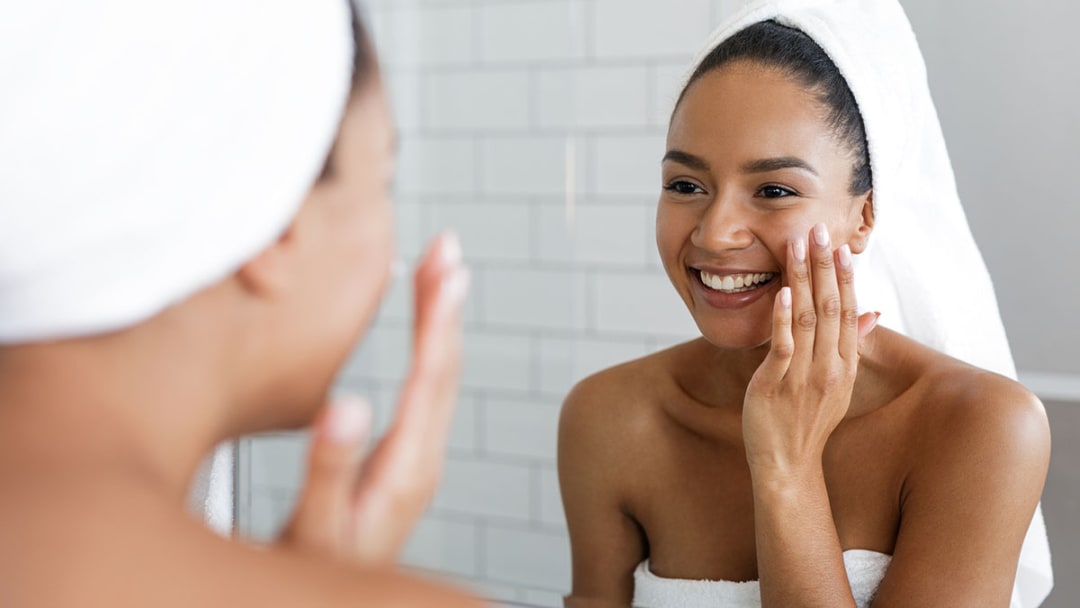
A woman with her hair wrapped in a towel smiling into a bathroom mirror as she presses oil into her cheek
step one

Cleanse, then mist

A mild cleanser, then a hydrosol mist or toner while skin is still damp. Hydrosols are the water layer, and most can be sprayed directly on skin with no dilution at all.

step two

Serum, then moisturizer

A water-based serum (aloe, glycerin, hydrosol) delivers hydration; the moisturizer holds it. Customizing a quality unscented lotion beats making one from scratch, because water plus oil needs real preservative chemistry.

step three

Facial oil to seal

Two or three drops of a carrier blend pressed in last, sealing the water-based layers under it. One or two drops of essential oil per fluid ounce is the whole dose for the face.

once a week

Mask or scrub

A butter mask for dryness, a clay mask for congestion, a sugar or salt scrub for texture. Never let a clay mask dry completely, and skip scrubs entirely while a sunburn heals.

Recipes to make this week

Three from our classroom and blog, one for each layer of the routine. Every recipe links to its full walkthrough.

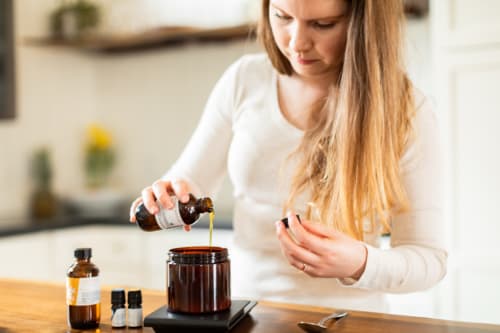
Pouring golden carrier oil from an amber bottle into a jar on a kitchen scale, with essential oil bottles alongside

Rosehip & Pomegranate glow facial oil

The sealing layer

  • Rosehip seed oil (Rosa canina) ½ fl oz (15 ml)
  • Pomegranate seed oil (Punica granatum) ½ fl oz (15 ml)
  • Carrot seed (Daucus carota) 3 drops
  • Roman chamomile (Chamaemelum nobile) 2 drops

Combine in a 1 oz bottle. Press two or three drops in after your moisturizer.

The full recipe on the blog →

Aloe & Lavender hydration serum

The water layer

  • Aloe vera gel ½ oz (14 g)
  • Vegetable glycerin ⅓ oz (10 ml)
  • Lavender hydrosol (Lavandula angustifolia) 1 tsp (5 ml)
  • Rose otto (Rosa × damascena) 1 drop
  • Sandalwood (Santalum album) 1 drop
  • Solubol dispersant 8 drops

Make it in a 1 oz (30 ml) bottle. No preservative, so make small batches and remake every couple of weeks.

The full recipe on the blog →

Helichrysum & rose calming oil

For redness that keeps returning

  • Argan oil (Argania spinosa) 1 fl oz (30 ml)
  • Helichrysum (Helichrysum italicum) 1 drop
  • Rose (Rosa × damascena) 1 drop
  • Carrot seed (Daucus carota) 2 drops

Four drops of essential oil in a full ounce of argan: the face wants restraint. Pair it with a rose and helichrysum hydrosol spritz.

The full recipe on the blog →
before you blend
  • The face takes one or two drops of essential oil per fluid ounce of carrier. Layered products compound the dose, so count across the whole routine.
  • Cold-pressed citrus is phototoxic: bergamot 2 drops, lime 4, lemon 12, grapefruit 24 per ounce. Sweet orange, distilled lime, green mandarin, yuzu, and tangerine are not phototoxic.
  • Never blend two phototoxic oils together; the risk compounds. Diffusing raises no phototoxic concern at all.
  • Water is not a carrier. Hydrosols and aloe need a dispersant such as Solubol to keep drops distributed, and unpreserved blends get remade every couple of weeks.
  • Patch test a new blend on a small area first, and keep essential oils away from the eyes.
  • Under about five, skip essential oils on skin: carrier oils and hydrosols are usually all a child's skin needs.

Learn it properly

A recipe makes one bottle. Reading the skin in front of you and formulating for it is what a certified aromatherapist does, and it is what these courses teach. Every hour below counts toward NAHA, AIA, and IFPA credentials.

Workshop2 hrs of credit

Making All-Natural Facial Products & Skincare Routines

Making all-natural facial products, ingredient by ingredient, with the routines they belong to.

Workshop1.5 hrs of credit

Working with Carrier Oils

The short class on the ingredient that makes up most of every blend: which carrier, and why.

Course36 hrs of credit

Aromatherapy for Natural Living

Eighteen essential oils in depth, plus the home and body care foundations that natural skincare sits inside.

Not sure where to begin? Answer four questions and find your pathway.

From students who took the skincare workshop

It had a lot of information and very easy to follow. It helped me to make my own skin care. Thank you so much.Sarvjeet G. · Making All-Natural Facial Products
I loved this course with all of the recipes and the in-depth information on specific ingredients. I appreciate you showing the oils and ingredients as you added them to what you were making.Summer W. · Making All-Natural Facial Products
I really enjoyed learning about more obscure oils, carriers, as well as the powders for exfoliation. The music during the blending was a nice touch!Melissa K. · Making All-Natural Facial Products

The school behind this guide

Every recipe and claim on this page comes from our own classroom and blog, written and reviewed by working aromatherapists, not compiled from other people's articles.

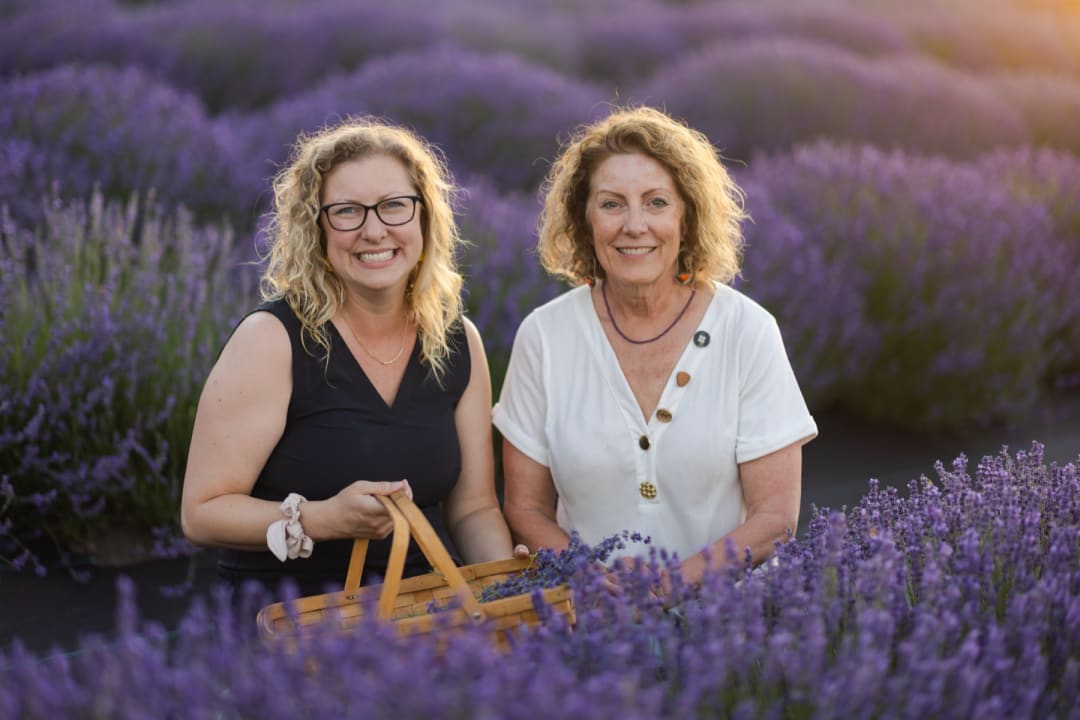
Karen and Jenny of Aromahead gathering lavender in the field

NAHA & AIA Approved

Aromahead is an approved school with the National Association for Holistic Aromatherapy and the Alliance of International Aromatherapists.

13,273+ students

have chosen the Aromatherapy Certification Program to turn a love of essential oils into real skill.

Working aromatherapists

Founded by Andrea Butje and taught by aromatherapists who see clients: the people who know why the answer changes from one person to the next.

Honest answers

Do essential oils hydrate skin?
Oils and butters help your skin hold the water it already has: calming inflammation, protecting the barrier, supporting healthy cell turnover. That is real work, and it is why a facial oil earns its place in a routine. The hydration itself comes from water, which is why the order of your layers matters more than any single product in them.
Are essential oils safe to use on my face?
Yes, sparingly and diluted: one or two drops per fluid ounce of carrier. The face is a sensitive area, and layered products stack the dose. Some of our favorite face recipes contain no essential oil at all.
Will facial oils clog my pores?
The carriers we teach with, argan, jojoba, baobab, and rosehip, are not known to clog pores. Oily skin often does better with a light facial oil than without one, because jojoba in particular reads to your skin like its own sebum.
Can I use citrus oils on my skin in summer?
Choose a non-phototoxic citrus, sweet orange, distilled lime, green mandarin, yuzu, or tangerine, or stay within the per-oil maximums: bergamot 2 drops, cold-pressed lime 4, lemon 12, grapefruit 24 per fluid ounce. A phototoxic reaction can leave permanent discoloration, and purity has nothing to do with it. Diffusing raises no concern.
What order do the layers go in?
Cleanse, hydrating mist or toner, serum, moisturizer, then facial oil to seal it all in, and mineral sunscreen in the morning. Masks and scrubs are the weekly deep treatment, not a daily step.
Why not make lotion from scratch?
Because water plus oil needs real preservative chemistry, and there is no such thing as a fully natural preservative. Vitamin C, citric acid, and grapefruit seed extract are antioxidants: they slow rancidity but won't prevent microbial growth. We customize a quality unscented natural lotion instead.
What can I use on a baby's skin?
Unrefined coconut oil on its own is mild and generally safe for inflamed, irritated, and sensitive skin. Aloe vera gel suits a weepy diaper rash, coconut oil a dry one. Save essential oils for later childhood.
What helps after too much sun?
Helichrysum or yarrow hydrosol, misted every half hour or so until the heat fades. Skip scrubs and exfoliation entirely until a burn has healed.
References
  1. Fukada et al. (2012). Rose otto reduced transepidermal water loss and prevented high cortisol levels.
  2. Ranzato, Martinotti & Burlando (2011); Lin, Zhong & Santiago (2017). Jojoba in wound healing, and plant oils in dermatitis and eczema.
  3. Lizard, Filali-Zegzouti & Midaoui (2017); Lin, Zhong & Santiago (2017). Argan oil's antioxidant and fatty-acid profile, and its role in wound healing.
  4. Cooksley (2015); Maruyama et al. (2006). Geranium and sebum regulation through surface circulation; its anti-inflammatory action.

Full bibliographic entries live on the source articles linked throughout this guide, starting with our guide to skin barrier support.

One good facial oil.
Then the formulation behind it.

Pathway 1 starts free: real lessons from the certification path, no card required. If your skin is why you came, it teaches the carriers, dilutions, and chemistry behind every recipe here.

Start Pathway 1 free