Home · Essential oil guides · Essential oils for anxiety

An Aromahead field guide

Essential oils for anxiety

Lavender, bergamot, and frankincense are where we start for anxious days, with sweet orange, Roman chamomile, ylang ylang, and cedarwood close behind. Inhalation is the method that matters most: a personal inhaler you can carry, 15 to 18 drops, breathed slowly. Used consistently, aromatherapy is a real tool for a nervous system under load, and it rewards knowing what you are doing with it.

  • Lavender (Lavandula angustifolia) · linalool, the most researched calming component
  • Bergamot (Citrus bergamia) · warm citrus that lowered cortisol in studies
  • Frankincense (Boswellia carterii) · the forest-calm oil for a busy mind
  • Sweet orange (Citrus sinensis) · over 90% d-limonene, and never phototoxic
  • Roman chamomile (Chamaemelum nobile) · soothing esters; one or two drops is plenty
  • Cedarwood (Juniperus virginiana) · cedrol slows a racing heart rate

Why breathing an aroma changes how you feel

Scent reaches the limbic system, where emotion, memory, and hormones meet. That is why an aroma can shift your state before a thought forms, and why the oil that calms you might do nothing for the person beside you.

It reaches the stress system directly

The limbic system is closely tied to emotions, memories, and hormones. Inhaled essential oil compounds can trigger it, helping regulate stress levels and lower cortisol, the body's primary stress hormone.1

Lv et al., 2013

Lavender held its own against a medication

In a clinical trial, lavender preparations performed as well as lorazepam, a benzodiazepine prescribed for generalized anxiety disorder. Its linalool interacts with the brain's GABA receptors, which help regulate nervous system activity.2

Woelk & Schläfke, 2010

Citrus measurably moved the needle

Bergamot's d-limonene has been shown to raise dopamine and regulate GABA receptors, and bergamot inhalation reduced cortisol. In an earlier study, a citrus aroma allowed the doses of antidepressants needed for treatment to be markedly reduced.3

Song et al., 2021 · Watanabe et al., 2015 · Komori et al., 1995

The oils, one by one

These are the six we teach with first for anxious days. Each entry tells you what the oil is good at, how we actually use it, and the one thing to watch for.

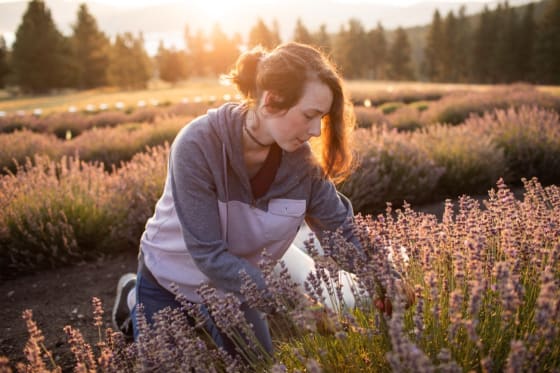
A woman kneeling among rows of blooming lavender at sunset, harvesting the flowers by hand

Frankincense

Boswellia carterii

Rich in α-pinene: if you have ever felt calm and refreshed after time in a forest, you have met that component. It helps settle cycles of overthinking. Buy it thoughtfully, as frankincense is considered endangered in some parts of the world.4

Sweet orange

Citrus sinensis

Over 90% d-limonene, and unusually for a citrus it is not phototoxic. Our first choice when anxiety comes with low mood, and a favorite for children.

Roman chamomile

Chamaemelum nobile

Its calm comes from soothing esters. In one study it reduced anxiety in coronary patients in intensive care and improved their sleep quality. One or two drops only, or it outshines everything else in the blend.5

Ylang ylang

Cananga odorata

A rich, heavy floral whose relaxing effect is almost hypnotic, carried partly by β-caryophyllene. Hold to 1 or 2 drops; more can drown the blend or bring on a headache.6

The anxiety oils at a glance

OilLatin nameReach for it whenBest first method
LavenderLavandula angustifoliayou want one oil that suits almost everyoneroller, 2 drops per 10 ml, on pulse points
BergamotCitrus bergamiatension needs warmth rather than sedationinhaler; on skin only at 2 drops per fl oz
FrankincenseBoswellia carteriiyour mind will not stop circlingdiffuser, or a roller with lavender
Sweet orangeCitrus sinensisanxiety arrives with low moodinhaler or diffuser; safe in sunlight
Roman chamomileChamaemelum nobileworry keeps you from resting1 drop in a bath salt blended into carrier
CedarwoodJuniperus virginianayour heart races and you need groundinhaler, or a bath salt with chamomile

There is no universal ideal oil for anxiety. It hinges on your own history and preferences, because scent runs through the limbic system: an aroma that returns me to my grandmother's kitchen may mean nothing to you.

Four ways to use them

Anxiety asks for something portable. These are the four methods we teach, with the drop counts that make each one work.

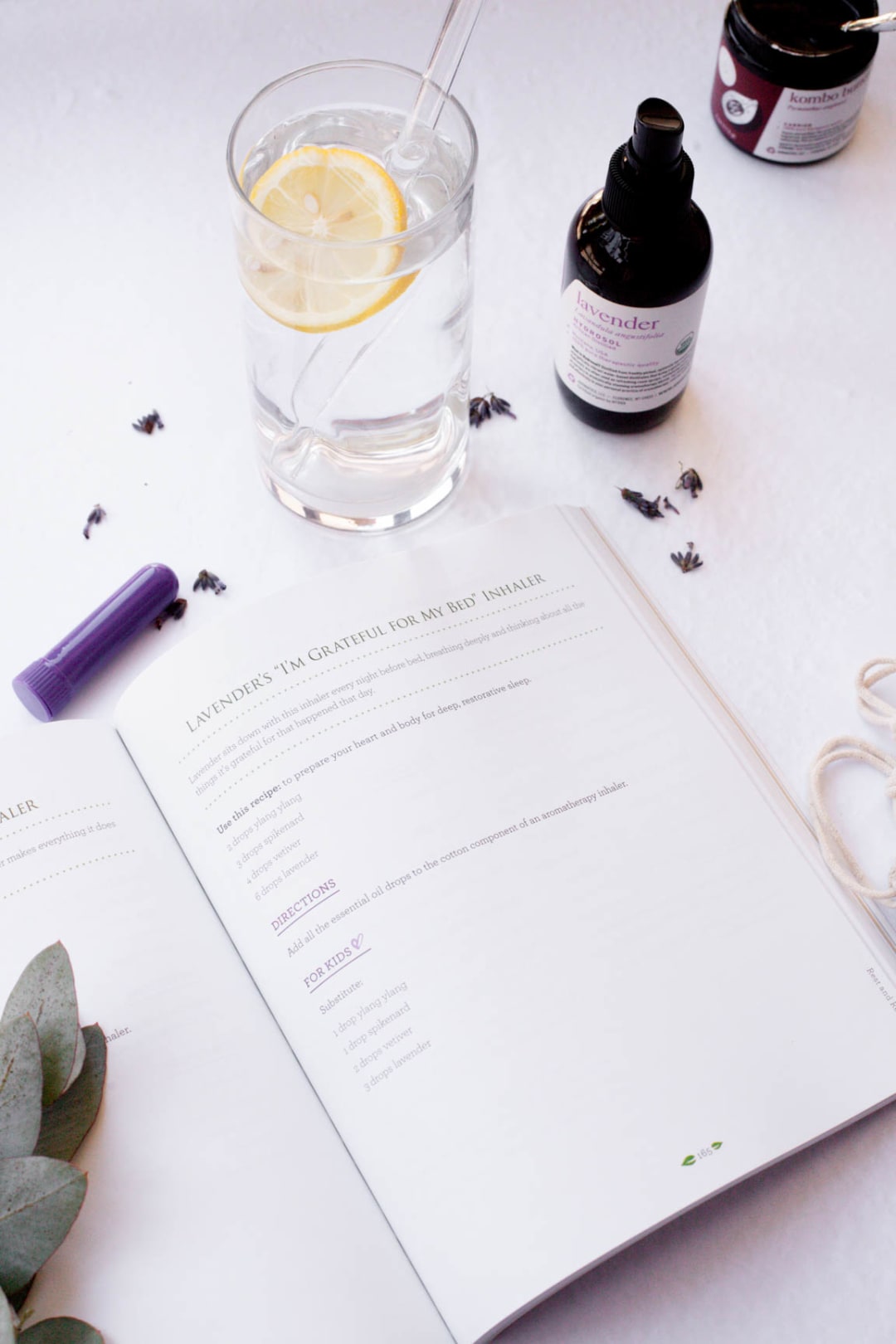
A purple aromatherapy inhaler beside an open recipe book, a lavender hydrosol bottle, and scattered dried lavender buds
the one to make first

A personal inhaler

15 to 18 drops on the cotton wick. It fits in a pocket, nobody else smells it, and using it means pausing for a few slow breaths, which does some of the work by itself. Studies had people use theirs twice a day for about two minutes.

for pulse points

A roller bottle

6 drops per 10 ml of carrier, topped with jojoba. Wrists, temples, behind the ears. Roll it on before anxiety arrives, not only once it has.

for the whole room

In a diffuser

6 to 12 drops per session, and no longer than 15 minutes an hour so your nose stays sensitive to it. Keep the room ventilated, and let pets leave if they want to.

for a longer ritual

Bath or lotion

5 drops dispersed in a tablespoon of carrier for a bath, or 10 to 12 drops per ounce of unscented lotion. Never drop oils straight into bathwater; water and oil do not mix.

Recipes to carry with you

Three from our classroom and blog, chosen for three different shapes of anxious. Every recipe links to its full walkthrough.

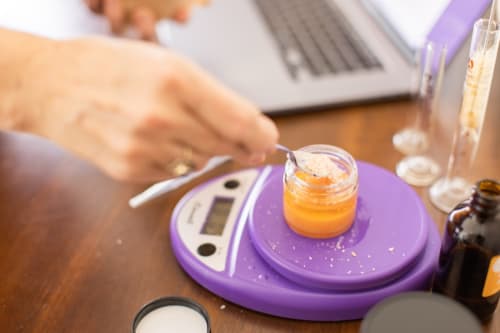
Hands spooning pink salt into a jar of blended oil resting on a kitchen scale

Happy Heart inhaler

Built from the blood-pressure studies

  • Bergamot (Citrus bergamia) 6 drops
  • Lavender (Lavandula angustifolia) 6 drops
  • Ylang ylang (Cananga odorata) 2 drops

Drop onto the inhaler wick. Participants in the research used theirs twice a day, about two minutes each time.

The full recipe on the blog →

Tranquility on the Go roller

For pulse points, before the wave hits

  • Jojoba (Simmondsia chinensis) 10 ml
  • Frankincense (Boswellia carterii) 2 drops
  • Lavender (Lavandula angustifolia) 2 drops
  • Sweet orange (Citrus sinensis) 2 drops

Roll onto wrists, temples, and behind the ears. For children aged five to ten, reduce to 2 drops total.

The full recipe on the blog →

Evening Calm diffuser blend

For the hour before bed

  • Lavender (Lavandula angustifolia) 3 drops
  • Bergamot (Citrus bergamia) 2 drops
  • Ylang ylang (Cananga odorata) 1 drop

Run the diffuser for 15 minutes as the evening winds down. Our blog publishes this one under its own name.

The full recipe on the blog →
before you blend
  • Baths need a carrier: disperse 5 or 6 drops in a tablespoon of carrier oil before the water, and skip the strong oils like peppermint and cinnamon bark.
  • Bergamot and most cold-pressed citrus are phototoxic on skin. Stay within the drop limits, choose sweet orange, or inhale instead.
  • For children over five, 5 or 6 drops per fluid ounce of carrier. Under five, hydrosols rather than essential oils.
  • Taking medication? Eugenol, citral, and chamazulene are the components to watch. A certified aromatherapist can work that out alongside your other practitioners, which is part of what the training covers.

Learn it properly

A recipe helps today. Becoming the person who can build one for a specific human being, around their medication and their history, is what a certified aromatherapist does. That is what these courses teach, and every hour below counts toward NAHA, AIA, and IFPA credentials.

Workshop3 hrs of credit

Natural Anxiety Relief

The three essential oil components that calm the nervous system, the research behind them, and how to make remedies that address anxiety's symptoms.

Workshop3 hrs of credit

Aromatherapy 101

The short on-ramp: what essential oils are, how to use them safely, and how to start blending with confidence.

Course235 hrs of credit

Aromatherapy Certification Program

The full professional path, where students write the kind of client case studies our blog publishes.

Not sure where to begin? Answer four questions and find your pathway.

From students who took the anxiety workshop

I enjoyed learning about the oils and why they help with anxiety relief. I enjoyed the recipes and the different products we can create to help with anxiety.Wendy A. · Natural Anxiety Relief
I learned a lot more about how to navigate the GC/MS reports and the family of oils I’m most interested in for emotional balance and anxiety relief, mental wellness, etc. I will continue to learn and get more comfortable working with oils.Noriann G. · Natural Anxiety Relief
So amazing. The quality of teaching in such easy to understand terms makes this course really stand out.William D. · Natural Anxiety Relief

The school behind this guide

Every recipe and claim on this page comes from our own classroom and blog, written and reviewed by working aromatherapists, not compiled from other people's articles.

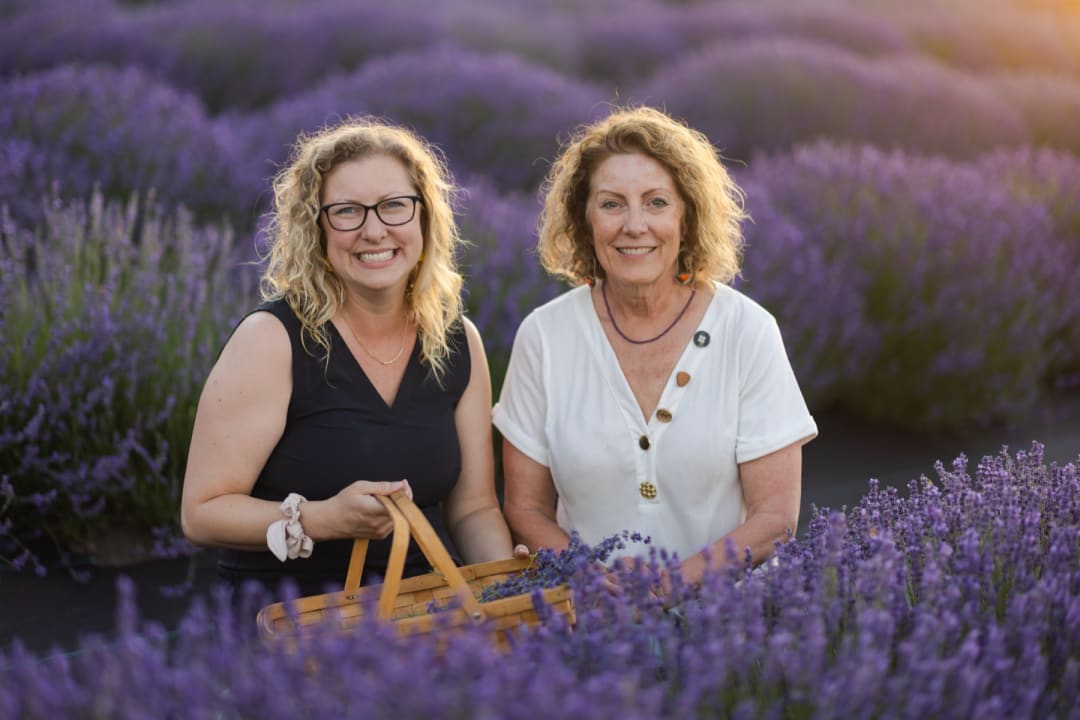
Karen and Jenny of Aromahead gathering lavender in the field

NAHA & AIA Approved

Aromahead is an approved school with the National Association for Holistic Aromatherapy and the Alliance of International Aromatherapists.

13,273+ students

have chosen the Aromatherapy Certification Program to turn a love of essential oils into real skill.

Working aromatherapists

Founded by Andrea Butje and taught by aromatherapists who see clients: the people who know why the answer changes from one person to the next.

Honest answers

Can essential oils cure anxiety?
They support mental health as part of a whole approach: self-care, mindfulness, movement, and sometimes professional help. For a lot of people aromatherapy is the most reachable piece of that, and the one they will actually keep up. What it is not is a cure for an anxiety disorder, and we won't claim otherwise.
What if I take medication, or I'm working through something heavier?
This is exactly where a trained aromatherapist earns their keep. A certified aromatherapist knows which components interact with what, why eugenol, citral, and chamazulene are the ones watched when someone is medicated, and how to build for one particular body instead of a general audience. Coordinating with your physician, nurse, or therapist is a normal part of that work: aromatherapists are trained to practice as part of a wider care team, and the results are usually better for it. We won't suggest you trade a prescription for an inhaler, and any good aromatherapist will tell you the same. What we will tell you is that this nuance is learnable. Learning it is most of what a certification teaches, and many of our graduates do exactly this work.
Can essential oils help during a panic attack?
One of the best things you can do during a panic attack is breathe as deeply and slowly as possible while reminding yourself that you are safe. Inhaling an aroma while you do that may help activate the parasympathetic nervous system, so calm comes a little more easily. An inhaler makes the breathing itself the practice.
Which method should I start with?
A personal inhaler. It travels, it stays private, and it takes 15 to 18 drops. Add a roller for pulse points if you like having something to reach for, and a diffuser when you want the whole room to change.
How many drops does each method take?
Inhaler 15 to 18 drops. Roller 6 drops per 10 ml of carrier. Diffuser 6 to 12 drops per session, no longer than 15 minutes an hour. Lotion 10 to 12 drops per ounce. Bath 5 drops, always dispersed in a carrier first.
Is aromatherapy safe for anxious children?
Over about five, yes, at 5 or 6 drops per fluid ounce of carrier, and sweet orange and Roman chamomile are our usual choices. Under five, we prefer hydrosols. The roller recipe on this page drops to 2 total drops for ages five to ten.
What about my pets?
Never apply an oil to an animal's fur or skin, or add it to their food. When you diffuse, leave a door open so they can leave the room, and trust them if they do.
References
  1. Lv et al. (2013). Inhaled aroma signals reaching the olfactory system and stimulating neurotransmitter release, regulating mood.
  2. Woelk & Schläfke (2010). Lavender preparation compared with lorazepam in generalized anxiety disorder.
  3. Song et al. (2021); Watanabe et al. (2015); Komori et al. (1995). d-Limonene, dopamine and GABA regulation; bergamot inhalation and cortisol; citrus aroma allowing reduced antidepressant doses.
  4. Ikei, Song & Miyazaki (2016). α-Pinene inhalation and the calming, restorative effect associated with forest air.
  5. Cho et al. (2013). Aromatherapy including Roman chamomile reduced anxiety and improved sleep quality among coronary patients in intensive care.
  6. Hongratanaworakit & Buchbauer (2006); Hwang (2006); Galdino et al. (2012). Ylang ylang, β-caryophyllene, and relaxation.

Full bibliographic entries live on the source articles linked throughout this guide, starting with our complete anxiety guide.

One inhaler today.
The understanding after that.

Pathway 1 starts free: real lessons from the certification path, no card required. If anxious days are why you came, it teaches the chemistry behind every blend on this page.

Start Pathway 1 free