Essential Oil Chemistry for Beginners: Six Components to Know
 By Jenny Williams and Karen Williams · August 27, 2026 · 10 min read
Every essential oil is a blend the plant made. One bottle of lavender holds dozens of components, and a few of them do most of the work. Learn six of them and blending stops being guesswork.
Karen and I spent six Wednesdays on exactly that, live on YouTube. Here is the whole series in one place, with the recipes, the numbers, and where to go next.

Are there chemicals in essential oils?
Yes. That is what makes them work. A plant builds its oil from chemical components, and a lab can list every one of them. The list is called a GC/MS report. Lavender's shows linalool and linalyl acetate near the top, with dozens of smaller lines below.
The numbers move from batch to batch. One lavender harvest tests at 26% linalool, the next at 30%. Same species, same farm, different season. A good supplier tests every batch, and the report matters more than the front of the label.
Six components, five families
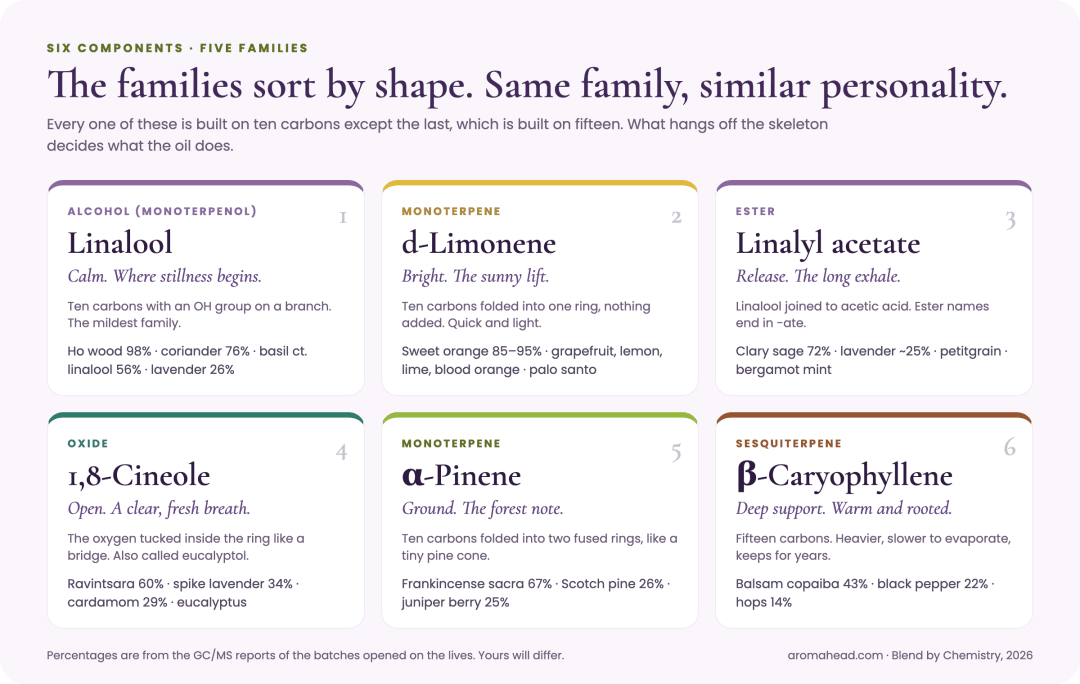
Chemists sort components into families by shape. Same family, similar personality. The six from the series cover five families.
- Alcohols. Linalool. The mildest family, and the calmest.
- Monoterpenes. d-Limonene and α-pinene. Ten carbons and nothing added. Quick, light, and short-lived on the shelf.
- Esters. Linalyl acetate. An alcohol joined to an acid. The names end in -ate.
- Oxides. 1,8-Cineole. An oxygen tucked inside the ring. Opens the breath.
- Sesquiterpenes. β-Caryophyllene. Fifteen carbons instead of ten. Heavier, slower, and it keeps for years.
Linalool: the foundation of calm
If lavender has ever calmed you, you have already met linalool. It is an alcohol, the mildest family, and it is why lavender is so easy to reach for at bedtime or on delicate skin.
Lavender is not the richest source. In the batches we opened, ho wood (Cinnamomum camphora ct. linalool) tested at 98% linalool. Basil ct. linalool came in at 56%, thyme ct. linalool at 37%, and lavender (Lavandula angustifolia) at 26%. Coriander seed runs around 76%. Anything above 20% is a good chunk.
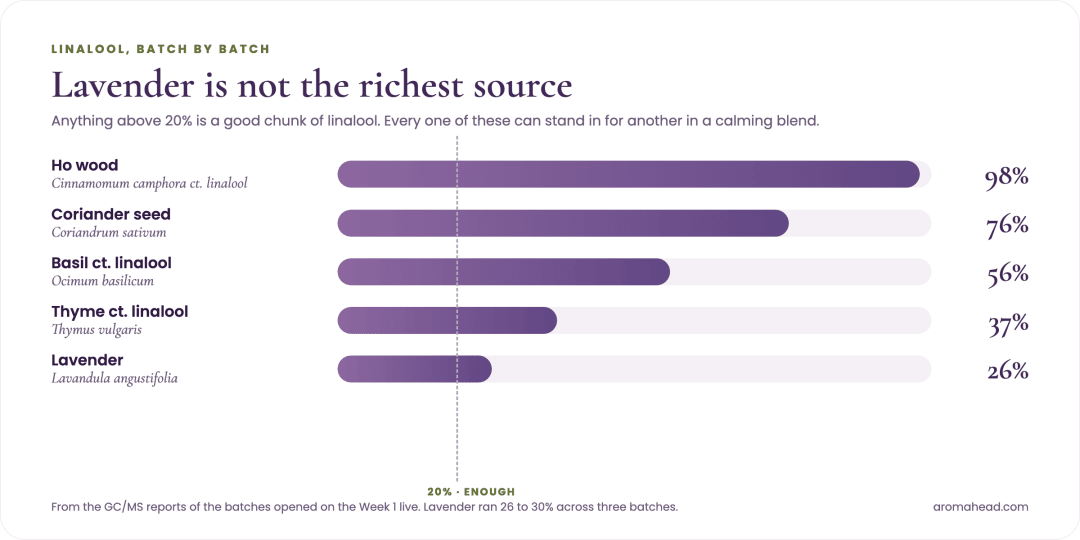
That is the whole idea behind substitution. No ho wood? Reach for basil ct. linalool. One thyme is not another, though. Thyme ct. thymol carries no linalool at all and smells sharp and medicinal.
We smelled them side by side on the live, and the chat lit up.
Having us smell the linalool in the different oils was absolutely genius! Thank you. I had an epiphany! I never realized these oils had such a similar (but different) scent. Love them all.
The week's inhaler is the simplest recipe in the series. 8 drops lavender, 5 drops ho wood, 3 drops basil ct. linalool on the wick. Write the drops on the label so you can make it again.

d-Limonene: uplift, brighten, and support
d-Limonene is a monoterpene, and it is most of what is in a citrus bottle. Sweet orange (Citrus sinensis) runs 85 to 95% d-limonene. Grapefruit, lemon, lime, and blood orange are all rich in it. So is palo santo, a wood that behaves like a citrus.
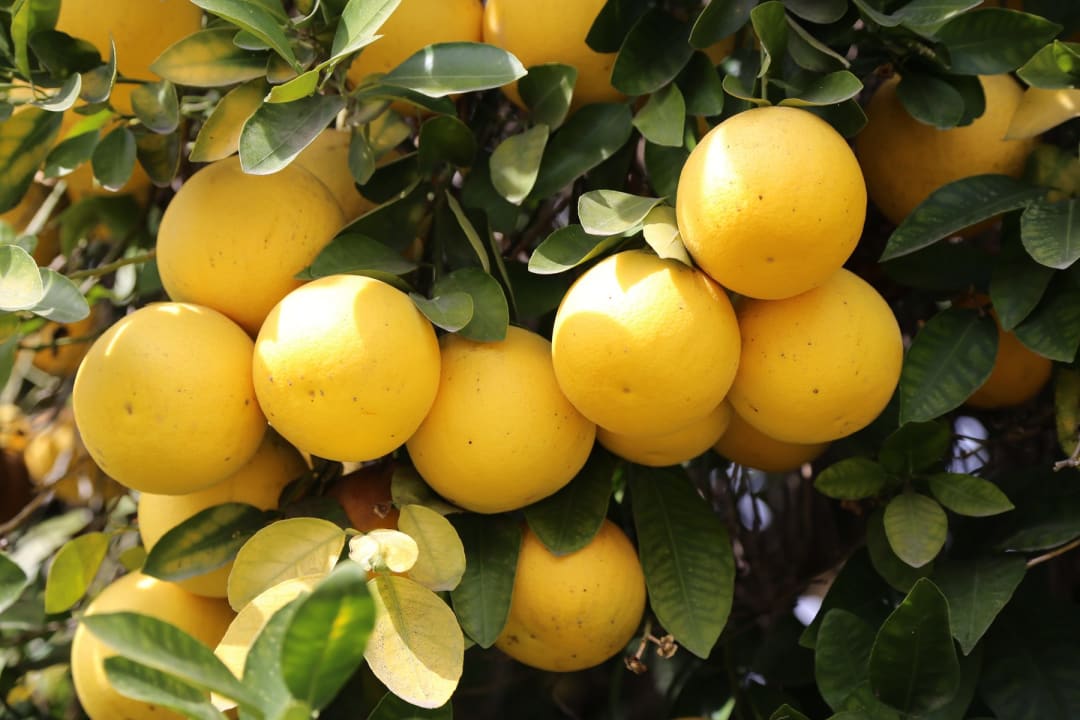
This is the sunny lift in a blend. Karen reaches for it at the afternoon slump. It also supports clear-looking skin and earns its place in cleaning sprays, where lemon cuts grease and the citrus oils slow common germs.
Two things to know. Cold-pressed citrus oils can be phototoxic in the sun. Keep grapefruit under 24 drops per ounce of carrier and bergamot to 2, or choose steam-distilled lime, which is not phototoxic. And citrus oils oxidize quickly, so plan on one to two years of shelf life.
One more. Look for the d on the report. Conifers carry l-limonene, the mirror image, and it smells and behaves differently.
I love the distinction, some companies only list "limonene" on their gcms reports, which is challenging. Thankfully we have this information to help guide us

Linalyl acetate: let the body unwind
If lavender has ever felt like a long, slow exhale, that is linalyl acetate. It is an ester, which means linalool joined to acetic acid. Ester names end in -ate.
Clary sage (Salvia sclarea) is the richest source we know, at 72% in the batch we opened. Lavender carries about 25%, and in some batches the ester reads higher than the linalool. Petitgrain and bergamot mint carry it too.
Esters are the antispasmodic family. What linalyl acetate does for a tense mind it also does for a tense muscle. That is why lavender and clary sage show up in so many massage oils, and why the week's recipe was a body butter. Lavender, bergamot mint, and petitgrain, whipped into shea and cocoa butter.
The research agrees with the nose. In one small trial, five minutes of inhaling oils high in linalool and linalyl acetate lowered tension and anger scores in pregnant women.

1,8-Cineole: breathe, clear, focus
Take the same ten carbons, curl them into a ring, and tuck the oxygen inside. That is an oxide, and 1,8-cineole is the one you know. Eucalyptol is the same molecule with a second name.
If eucalyptus has ever opened a window in your breath, you have met it. Ravintsara tests at 60%, spike lavender (Lavandula latifolia) at 34%, cardamom at 29%. True lavender has almost none. That is the difference you smell between the two. Spike is lavender's punk rock cousin.
Cineole is the decongestant in a chest rub and the clear head on a foggy afternoon. It asks for care with children. We wait until age five for topical use. For a baby, run two or three drops in a diffuser in an empty room, turn it off, then bring the child in.
One tree, two oils. Ravintsara and ho wood are both Cinnamomum camphora, grown in different places. One makes the opening molecule and the other makes the calming one. Our 1,8-cineole reference article goes deeper.
α-Pinene: ground, support, restore
Walk through a pine forest and feel your shoulders drop. That is α-pinene. It is a monoterpene like d-limonene, but its carbons fold into two fused rings instead of one, so it comes out forest instead of orange.
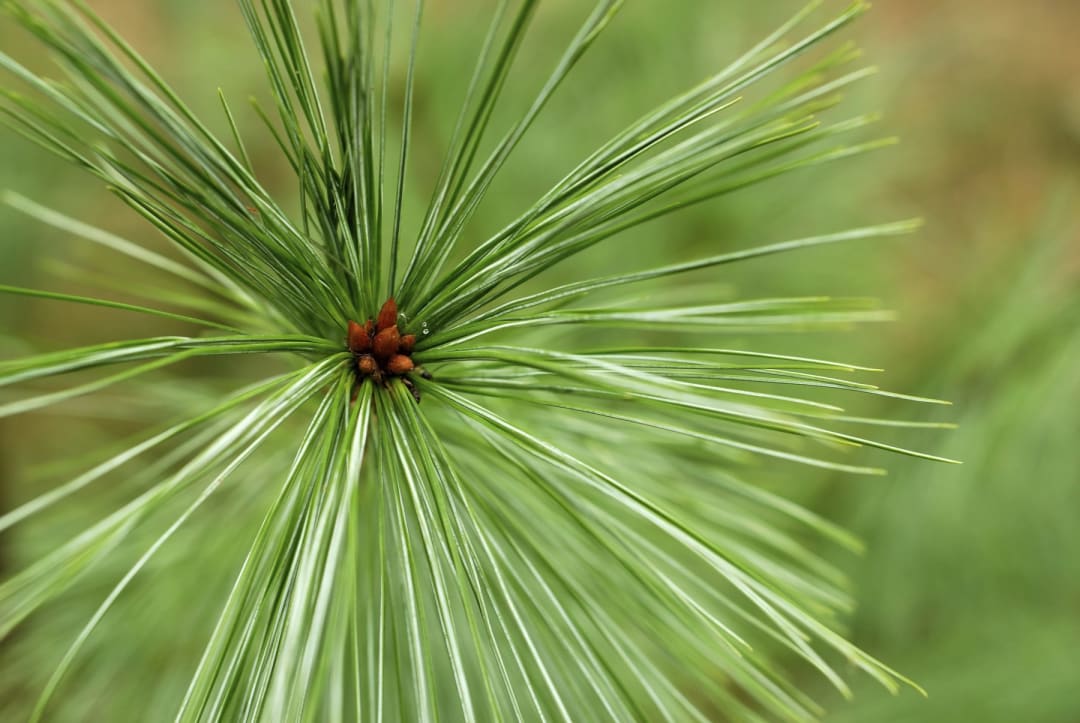
The richest source surprised everyone. Frankincense sacra (Boswellia sacra) tested at 67% α-pinene, ahead of Scotch pine at 26% and juniper berry at 25%. Blood orange, which people guess is pine-rich, sits under 1%.
I learned that some oils that I thought had a-pinene didn't have a lot of it. I am so happy that you guys have the GC/MS reports
Oils rich in α-pinene are the ones we reach for in muscle blends, and for a friend who needs steadying. The week's Muscle and Joint Comfort blend is 6 drops each of frankincense sacra, juniper berry, and Scotch pine in 1 fl oz of arnica-infused oil. That is a 3% blend for a couple of weeks. For daily use, take it down to 2%. More on α-pinene here.

β-Caryophyllene: deep support and restoration
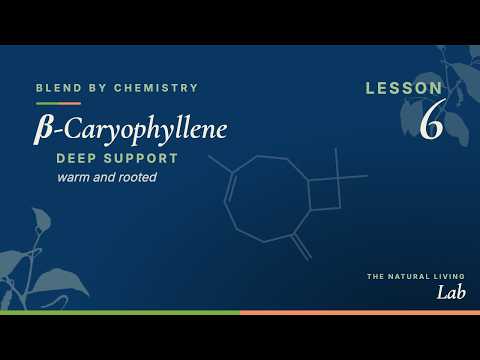
Every molecule so far was built on ten carbons. β-Caryophyllene is built on fifteen. It is a sesquiterpene, one and a half times bigger, and the extra weight changes everything. It evaporates slowly, so it holds a blend together as a base note, and it keeps for years where the citrus oils keep for one or two.
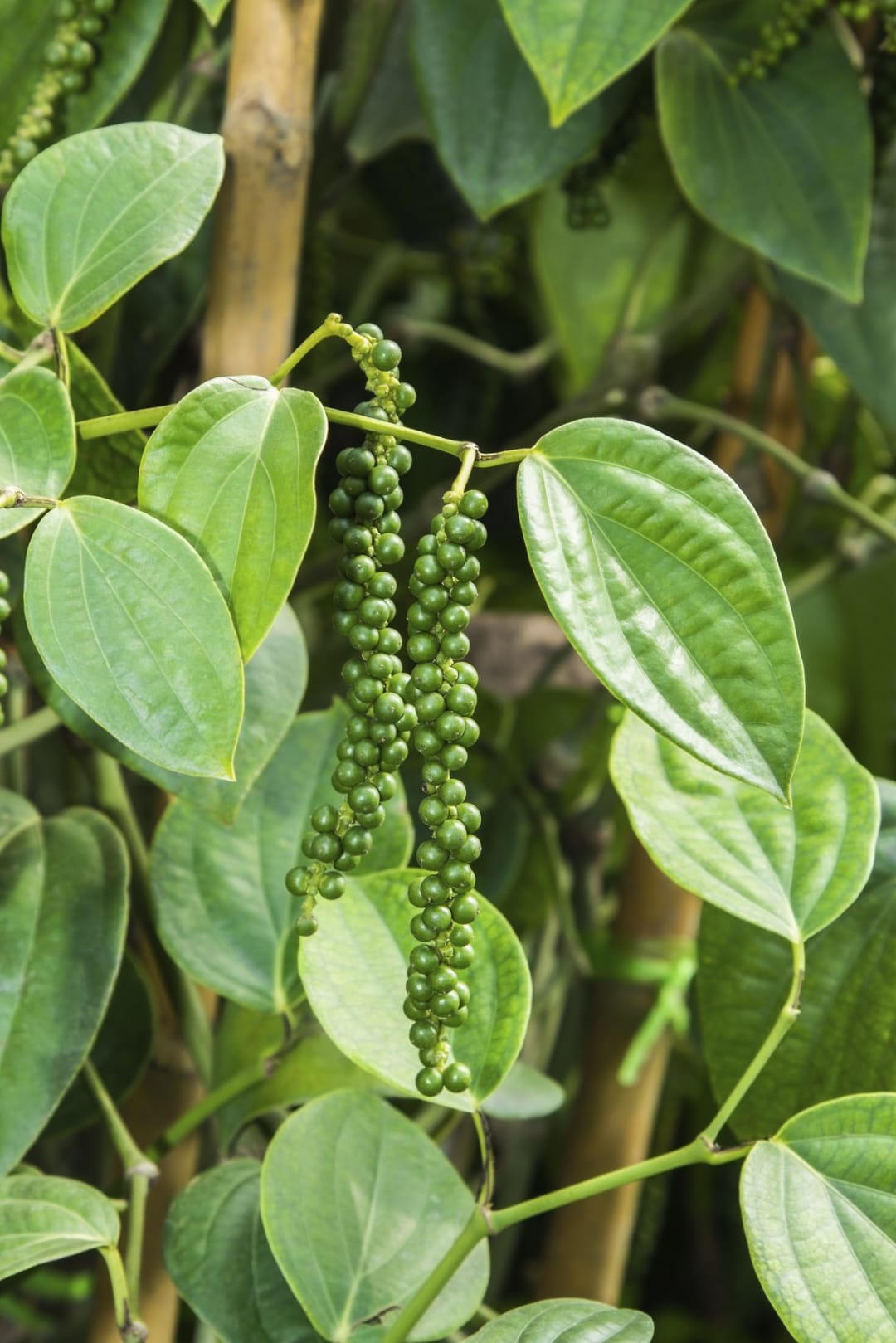
Balsam copaiba tests at 43%, black pepper (Piper nigrum) at 22%, hops at 14%. Fourteen sounds small next to a citrus oil. It is plenty. Even 5% of a component is a lot.
When a blend feels like a warm hand on your back, this is usually why. Black pepper is the oil aromatherapists reach for in pain blends, and often for someone working to quit smoking. The night rest blend that week was hops, lavender, and black pepper.
A 2018 review pulled together 41 laboratory and animal studies on β-caryophyllene. Human trials are still ahead, so we say what we see in practice and no more.
How to read a GC/MS report
GC/MS stands for gas chromatography mass spectrometry. A lab separates the oil into its components and measures each one. The report is a list. Component, percentage, batch number.
Three habits. Read the Latin name first, because over 40 lavenders are distilled and they are not the same oil. Find the top three lines, because they set the oil's personality. Check the batch number against your bottle, because next year's harvest will read differently.
A report will not tell you how an oil smells or whether you love it. It tells you what is inside, which is the part guessing cannot give you. Here is how to know if an essential oil is pure, and how three thymes compare.
How chemistry changes the way you blend
Once you know the components, you stop blending by oil name and start blending by job. Want calm? Pick something over 20% linalool. Want lift? Reach for d-limonene. Want the blend to last on the skin? Add a sesquiterpene.
Substitutions get easy. Out of ho wood, use basil ct. linalool. Out of Scotch pine, use juniper berry. And you use fewer drops, because the chemistry is doing the work.
Before I came to Aromahead, I thought more drops were better. I was thrilled to learn that less is best.
The Component Blending course teaches this in full, family by family.
Where to start with aromatherapy
The series was an appetizer. Here is the meal.
- New to essential oils? Start the path free. Two free classes, and the chemistry lens from the first lesson.
- Want the chemistry properly? The Essential Oil Specialist course studies 48 oils in six lessons. It is Part 1 of the Aromatherapy Certification Program.
- Want to be certified? The certification program adds the case studies and research paper. It meets the education requirements for NAHA Level 2 and AIA Level 2.
- Already blending? Component Blending is the chemistry course on its own.
Robin's message in week two says why we made the series.
I love this because the chemistry part of the ACP was the block that kept me from finishing. I’m ready to jump back in. Thank you for this warm-up.
The closing live walks through every door, and answers the questions people asked on the way.

Questions from the live chat
Does every bottle of lavender have the same amount of linalool?
No. The kit's lavender read 26%, another batch 30%, and one member's artisan lavender 34%. Same species, different harvests. Your GC/MS report has the number for your bottle.
What is a chemotype?
One plant species that makes a different oil depending on where it grows. Thyme, basil, and rosemary all do it. The same species high in the mountains of Crete and down at sea level can give two different oils. The label says ct. linalool or ct. thymol. Read it.
What is the difference between d-limonene and l-limonene?
They are mirror images, like a left hand and a right hand. d-Limonene is the citrus form and the better studied one. l-Limonene turns up in conifers and smells different. If a report just says limonene, ask which.
Can I use 1,8-cineole oils with children?
Carefully. We wait until age five for topical blends, at 5 or 6 drops in the whole blend. Under that age, diffuse two or three drops in a room before the child comes in. For a 3-year-old's blend, we would use 2 or 3 drops in total.
How long do essential oils keep?
It depends on the family. Monoterpene oils like the citruses keep one to two years. Linalool-rich oils keep three to five. Sesquiterpene oils keep longer still. The clock starts at distillation, not at your door, so ask for the distillation date.
Do I need chemistry to use essential oils well?
You can start without it. Lavender works whether or not you know why. Chemistry is what turns a favorite oil into a choice you can explain, substitute, and dose with confidence. Three to five passes at a new idea is normal. Give it time.
Come compare notes with us. The Natural Living Club is where the chat keeps going between lives.
Chemistry is the lens we use in every Aromahead course. Start the path free, and bring your questions to the next live.
References & research
- Understanding Essential Oil Chemistry, Aromahead Institute.
- How to Know if an Essential Oil is Pure: All About GC/MS Testing, Aromahead Institute.
- 1,8-Cineole Benefits, Safety, and Oils High in Eucalyptol, Aromahead Institute.
- Discover α-Pinene: Using Chemistry to Unlock the Power of Essential Oils, Aromahead Institute.
- How d-Limonene in Citrus Oils Boosts Happiness, Aromahead Institute.
- What's in Your Essential Oils? Let's Compare 3 Thymes, Aromahead Institute.
- Blend by Chemistry, the live series, Aromahead on YouTube, July 8 to August 26, 2026. Percentages quoted in this article are from the GC/MS reports of the batches opened on the lives.
- Igarashi M. et al. Physical and psychologic effects of aromatherapy inhalation on pregnant women: a randomized controlled trial. Journal of Alternative and Complementary Medicine, 2013. doi:10.1089/acm.2012.0103
- Machado K.C. et al. A systematic review on the neuroprotective perspectives of beta-caryophyllene. Phytotherapy Research, 2018. doi:10.1002/ptr.6199
- St-Gelais A. The Highs and Lows of GC-MS in Essential Oil Analysis, Tisserand Institute, 2017.

Instructor and Director of Student Experience. Jenny hosts the Wednesday lives and built the Blend by Chemistry series, the one she wishes she had before her own certification.

Lead instructor and face of Aromahead. Karen has taught tens of thousands of students to blend with confidence, from first drop to clinical practice.
This is what Natural Living begins, and certification completes.
Start with the chemistry, safe dilution, and blending in Natural Living · Natural Living. Free to begin.
A new oil, a recipe, and a lesson — every week.
Join the free weekly email and keep learning between visits. No spam, just good aromatherapy.
Free forever · unsubscribe anytime · written by the Aromahead instructor team.